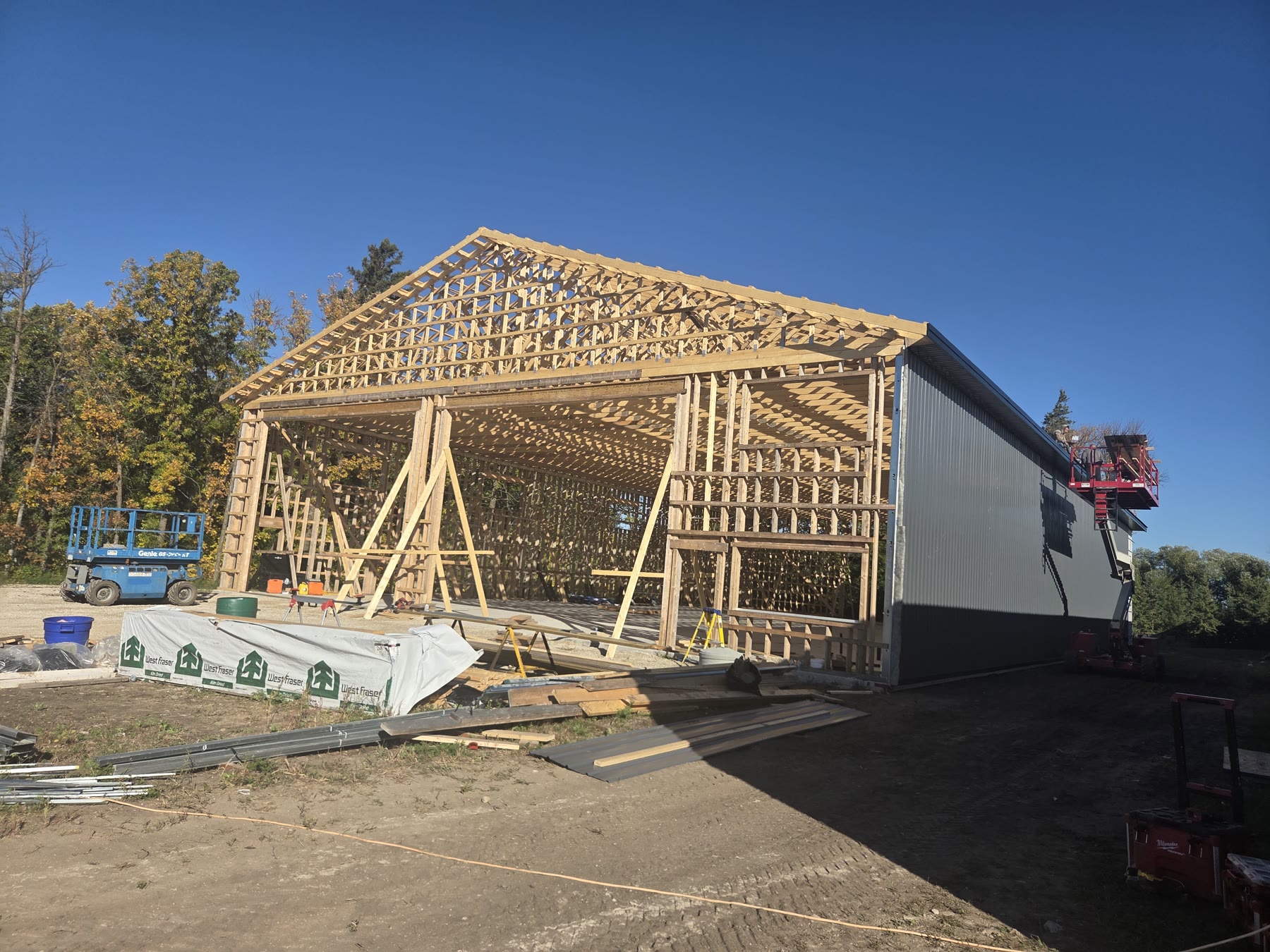
The honest answer to how long a shop takes is that it depends, and anyone who gives you one fixed number before they know your site is guessing. What we can do is show you the steps in the order they happen and tell you what makes each one longer or shorter, so you can plan around them.
Step 1: Decide and design
This step is up to you, and it can go as fast as you want. Choose your size, your use, your frame type and your doors. The 3D designer lets you try layouts and see the building before anything is ordered. A clear plan here saves time in every later step, because changes after the drawings are made are the most common cause of delay.
Step 2: Drawings and permit
Once you have decided, the building is drawn up, and in most places a building permit is required for anything over a small size. Your RM or town office sets its own rules and its own pace, and some are quicker than others. Summer is busy for them too. The permit is often the longest wait of the whole job, and the one nobody on the crew controls. Call your municipality early and ask what they need. Our permits and timelines guide lists what to have ready.
Step 3: Ordering materials
Once the plan is settled, the material package is ordered. Your building arrives as a kit made for your size. Kit-only buyers need equipment on site to unload it, and a flatbed needs room to turn. Delivery to your site is always a separate cost and is quoted with your building. If a lot of people are ordering at once, for example in spring, ordering early helps.
Step 4: Site and concrete
The pad is where weather matters most. A site has to be cleared and levelled, the gravel base compacted, the forms and rebar set, and then the concrete poured and left to cure. Rain delays a pour, and extreme cold changes how concrete cures. After that, the slab needs time before a building goes on it. If you want in-floor heat, the tubing is laid before the pour, which is another reason to decide early. Read our concrete pad guide.
Post frame buildings work differently. The posts go into the ground, and the slab is poured after they are set, or left out for cold storage. See the post frame page.
Step 5: Erect and close in
Walls, trusses, roof and metal go up. This step moves quickly once the materials and the slab are ready, but wind, snow and rain can stop work, and crews do not work when it is not safe. Doors and windows come next, so the building is closed to the weather.
Step 6: Finish the inside
If you chose a complete package, the insulation, vapour barrier and metal liner go in. Electrical and heating are often done by other trades after that, and their schedules are separate. Ask your electrician and heating contractor early, because a good one can be booked well ahead. For heating, see the in-floor heat guide.
What makes a build slower
The biggest slowdowns are late changes to the design, a permit that takes longer than expected, a slab that is not ready, bad weather during the concrete or the erection, and a site that a truck cannot reach. Small size changes matter less than people think; changes in door positions, wall heights and frame type matter more.
What you can do to move things along
Make your decisions early, call your municipality before the drawings are final, clear access for trucks, and have your power and water plans in place. Winter is a good time to do the paperwork, because the permit and the order can be settled while the ground is frozen, and our winter building guide explains what can go ahead in the cold.
When you are ready, design your shop free in 3D. If you want to know how your own site and season look, book a free call. We call back within one business day, and we will not give you a date we cannot keep.
Common questions
How long does it take to build a shop?
It depends on the size, the frame type, the permit, the weather and the season, so there is no one fixed number. We can talk through your site on a free call.
What is the longest wait in building a shop?
Often the building permit, because every municipality works at its own pace. The concrete step is the most weather-sensitive part of the build.
Can I start planning a shop in winter?
Yes. The design, the permit application and the material order can all be done in winter, and the ground work can be planned around the weather.
Is delivery included in the building?
No. Delivery is quoted separately with your building.