A shop that is not insulated well costs money every winter and drips on your tools every spring. Here is how a properly insulated shop is built up, layer by layer, and the choices that matter on the prairies, where a -30 morning is normal and the heat has to stay in.
Why insulation matters more in a shop
A shop has large walls, a big roof and a lot of doors. All of that surface leaks heat, so the building loses it faster than a house of the same floor area. If you plan to heat the shop, insulation is the cheapest way to keep your heating bill under control, and it also keeps the air steadier so metal tools and vehicles do not sweat.
The standard we use
Our complete packages include R22 insulation in the walls and R50 in the ceiling, with a vapour barrier and an interior metal liner. Shell packages come without insulation, so you can finish the inside yourself. If you want a warmer wall, R28 walls are available as an upgrade. The ceiling gets the higher number because warm air rises and the roof is where most of the heat escapes. See the kit vs full build guide for what each package includes.
Walls: the frame decides how easy it is
A stud frame wall has a deep cavity between the studs, and insulation fits in it cleanly, which is why it is our best pick for a shop you heat. A post frame wall has posts and girts that make an uneven inside surface, so the insulation takes more work to fit, and it is a better match for unheated storage. In a steel frame building, steel conducts heat, so the insulation is detailed with batts, spray foam or insulated metal panels to avoid condensation. The steel against wood comparison covers that.
The vapour barrier: put it on the warm side
In a cold climate, warm indoor air carries moisture. If that moisture reaches cold wall materials, it condenses inside the wall, and the insulation gets wet and stops working. A vapour barrier on the warm side of the insulation stops the moisture from getting there. The barrier has to be continuous, with seams taped and the edges closed tight, and every hole for a wire or a pipe is a place where it can fail.
The interior liner
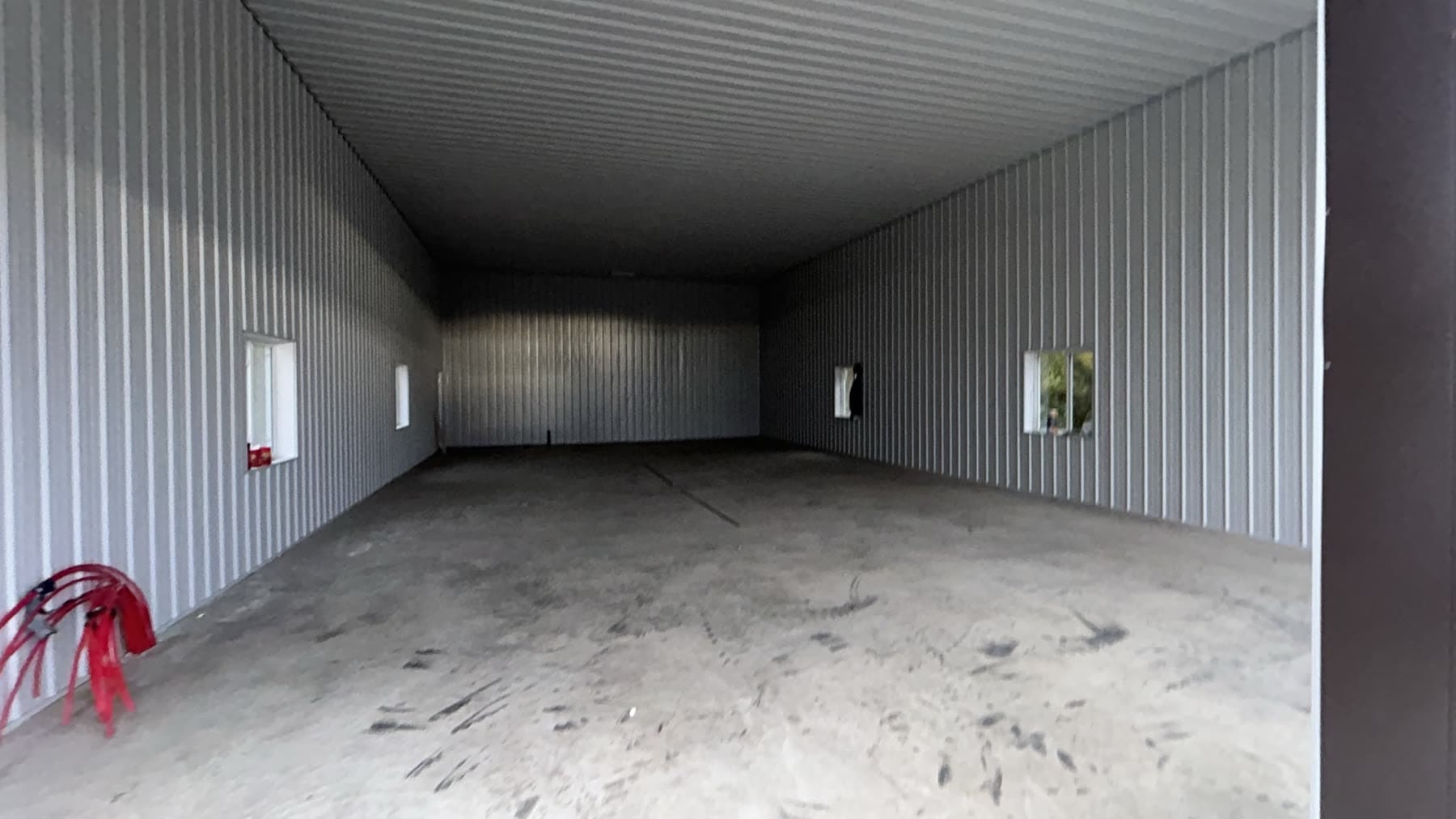
The metal liner is the finished surface of the wall and ceiling. It is tough, easy to wipe down and bright, which makes the shop much easier to work in. It also protects the vapour barrier from being punctured by tools, ladders and the corner of a shelf. You can hang cabinets and shelving from it using the framing behind it.
The floor and the doors
People often forget the floor. Under a concrete slab, rigid foam board slows heat loss to the ground, and it is part of how an in-floor heating system is built, so read our in-floor heat guide if you are considering it. Overhead doors are the largest openings in the wall, so how well they seal matters. Look at weatherstripping and a tight threshold, and talk to us about door options when you design. Our walk-in doors are insulated to about R12.
Avoid these mistakes
Do not insulate and then forget about air leaks, because gaps at the eaves, around doors and at wall plates let out as much heat as thin insulation. Do not skip the vapour barrier to save time. Do not heat a building before the slab has dried and the walls are closed up, because trapped moisture has nowhere to go. And do not size a heater by guesswork; your heating contractor can calculate the load once the insulation is chosen.
Plan it with the building
Insulation is cheapest and best when it is part of the design, not an afterthought. Design your shop free in 3D, choose a complete package, and mention if you want a warmer wall. For help choosing, book a free call.
Common questions
What R-value do you use for shop walls and ceilings?
Our complete packages include R22 in the walls and R50 in the ceiling. R28 walls are available as an upgrade.
Do I need a vapour barrier in a shop?
In a heated shop, yes. It keeps indoor moisture from reaching the cold parts of the wall, where it would condense and soak the insulation.
Which frame is easiest to insulate?
Stud frame, because the deep wall cavities take insulation cleanly. Post frame and steel frame can be insulated too, with more care in the detail.
Is a shell package insulated?
No. A shell package is the structure only, so you add the insulation, vapour barrier and liner yourself. The complete package includes them.